Which funnel fits which jar
Match the stem to the neck: which funnel suits bottles, which suits mason jars, and how to pour oils, vinegars, and dry staples without spills.
A pool of olive oil around the bottle neck usually means the funnel stem choked on trapped air or tipped over mid pour. We keep several widths on our bench because one shape cannot fit every jar.
Check the opening before you pour
Set the empty container on your counter and look straight down into the mouth before reaching for a tool. A narrow vinegar cruet needs room around the stem for displaced air to escape as liquid enters. If the metal fits so tightly that air cannot slip past, your pour will back up and overflow across the counter.
For dry staples like whole peppercorns or dried oregano, choose a spout that gives every piece clear clearance. Powders compact quickly when crowded, so a wider cone keeps ground cinnamon moving instead of bridging across the neck. Give yourself a few millimeters of clearance on every side to keep the flow steady.
Wide mouth funnels for canning jars
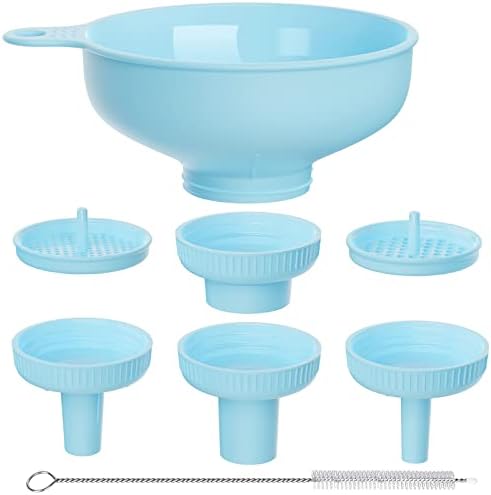
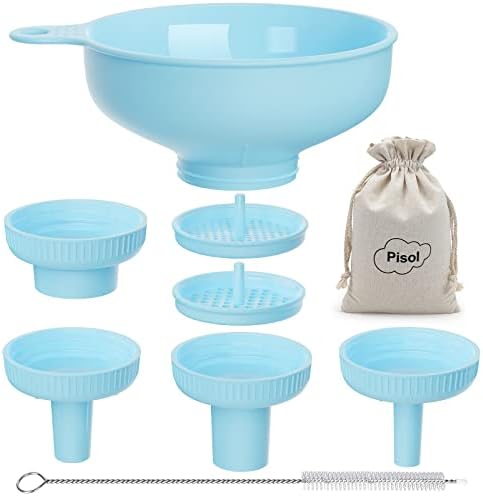
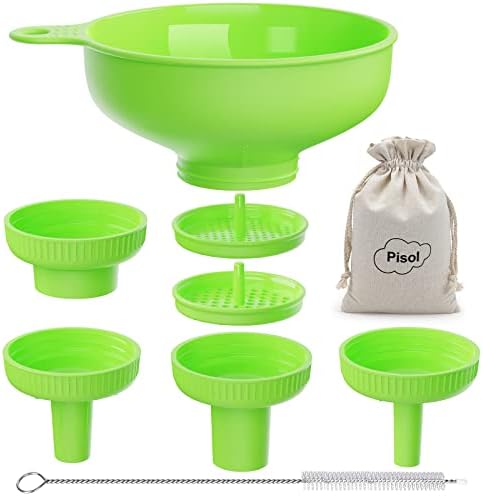
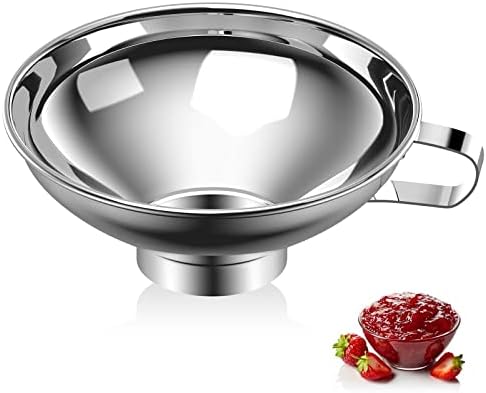
A canning funnel has a broad base designed to rest squarely inside the rim of a regular or wide mouth glass jar. This wide throat allows ladles of chunky salsa, fruit preserves, or hot broth to drop straight to the bottom without coating the threads where the lid needs to seal cleanly.
That same wide neck causes trouble if you try to balance it over a small spice tin. The lower edge sits outside the rim, tipping the whole cone sideways and sending half your spices onto the tabletop. Keep these broad tools reserved for mason jars and wide storage canisters.
Narrow stems for oils and vinegars
Liquid decanting calls for a long, slender stem that reaches deep into the neck of the bottle. When pouring cooking oil from a large metal tin into a daily glass dispenser, the deep stem anchors the funnel so it does not wobble under the weight of a heavy pour.
Tilt your pouring vessel slowly so the liquid sheets down the inner wall of the cone rather than dropping in one heavy plunge. This leaves half the stem open for rising air bubbles, preventing that sudden gurgle that spits drops onto your sleeves and cutting boards.
Using drop in strainers and nesting sets
A small removable strainer disc turns a liquid funnel into a filter for infused oils, pan drippings, or citrus juice. Drop the perforated disc into the bottom of the cone before you start pouring to catch rosemary needles, chili flakes, or lemon seeds before they slip into your clean bottle.
When the prep work is finished and everything has dried from the wash, nested metal funnels stack inside one another to save drawer space. Keep them tucked in a shallow prep drawer near your cutting board so you can grab the right diameter the moment a bulk bag needs dividing.
Worth remembering
- Leave space between the stem and the bottle neck so displaced air can escape easily.
- Use a wide canning funnel only on jars large enough to support the bottom rim.
- Drop the perforated strainer disc into the cone to catch seeds and whole herbs.
- Store your funnels nested together in a dry drawer close to your decanting station.
Take a quick look at the neck of your jar before you lift the gallon jug. Match the metal stem to the opening on your counter, pour at an even pace, and your workspace stays dry.