Managing soft butter on your counter all week
Where to set the dish, what an airtight lid actually does, and how to keep butter soft enough for toast without letting it turn greasy.
A cold stick from the fridge tears morning toast down to the crust. Leaving butter on the counter solves the tearing, but heat and open air can turn a neat block into a slumped mess.
What a locking lid really does
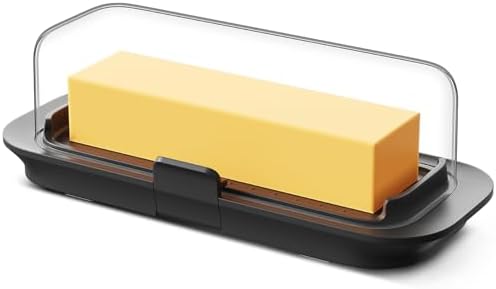
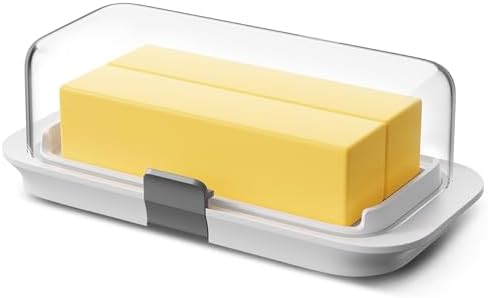
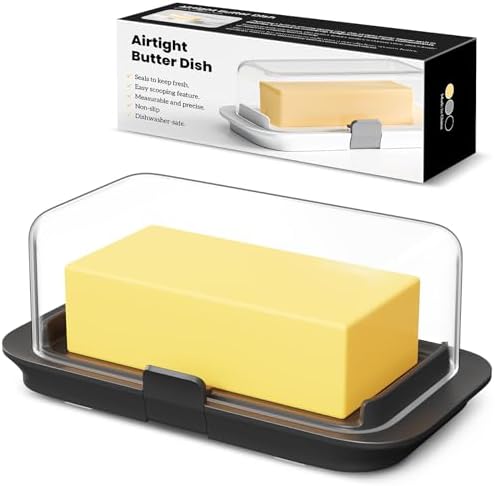
A standard ceramic cover rests loose over a base, letting fresh kitchen air drift across the fat. Our airtight butter dish uses a firm silicone ring and locking latches on the sides to press the clear top flat against the rim. That seal keeps out cooking odors and stray counter dust while you fry dinner nearby.
The airtight seal also keeps the butter from drying along the edges. When a block sits under a drafty cover, the outer layer turns dark yellow and crusty while the center stays pale. Locking the lid down keeps the texture uniform across the entire surface so the first scrape spreads like the rest.
Sizing the dish to your household speed
Butter softens best when it moves steadily from the counter to your bread plate. If your home goes through half a stick each week, loading a full half pound block into the base means the tail end sits exposed for weeks. Match the portion on the tray to what your family consumes over three or four days.
When you buy larger multipacks, slice off only what you plan to butter on toast or melt into weekend eggs. Leave the remaining wrapped sticks in the cold crisper drawer. Refilling the dish with smaller fresh portions keeps the butter pale, sweet, and manageable on the knife.
Finding the coolest corner of the counter
Direct sunlight through a morning window will warm a clear lid within thirty minutes. That sudden greenhouse heat turns firm butter into liquid fat that puddles along the silicone gasket. Keep the base parked on an interior counter run, tucked back against the backsplash and out of direct light.
Keep clearance around the dish when using your range or oven. The heat radiated from a hot skillet or an active baking sheet warms nearby counters fast. Set the tray at least two feet away from your burners, the toaster slot, and the warm side of an electric kettle.
Managing hot days and kitchen shifts
Midsummer afternoons can push an indoor kitchen past seventy-five degrees. When the room climbs that high, butter loses its structure, slides sideways in the base, and separates into oil. If your kitchen runs hot while you are out for the day, tuck the sealed dish into the fridge door until evening.
Pull the dish back out about thirty minutes before dinner to let it temper slowly. The locking lid holds its seal during these short trips in and out of the cold, so the butter does not pull in onion smells from the refrigerator shelves.
Working with standard sticks versus wide blocks
An Eastern standard stick is tall and narrow, while a Western stick sits wider and shorter. Our base accommodates both shapes without the butter brushing against the inner walls of the lid. When loading a tall stick, center it squarely on the molded tray guides so the lid drops down clean.
European style butter comes in thick eight ounce blocks that sit lower and wider than regular sticks. Slice these wider blocks lengthwise before pressing them into the tray, or shave thin curls directly from the top. Keeping the fat below the top rim prevents smears on the silicone seal when snapping the latches.
Worth remembering
- Set the dish away from the stove to avoid radiant heat while you cook.
- Wipe the inner silicone ring clean whenever you load a fresh cold stick.
- Slice bulk blocks into smaller sections that you can finish within four days.
- Park the container on a shaded counter spot out of direct morning sunshine.
Set your dish in a shaded corner, stock only what your household uses over a few days, and enjoy smooth spreading on every slice of breakfast bread.