Caring for your seasoned cast iron grill press
A plain guide to cleaning, drying, and oiling your cast iron press so the seasoning stays black, smooth, and ready for the griddle.
A cast iron press earns its keep by holding flat contact against heat, but raw iron will rust overnight if put away wet. Taking care of the black seasoned layer takes about two minutes once the griddle cools down.
Understanding the dark seasoned surface
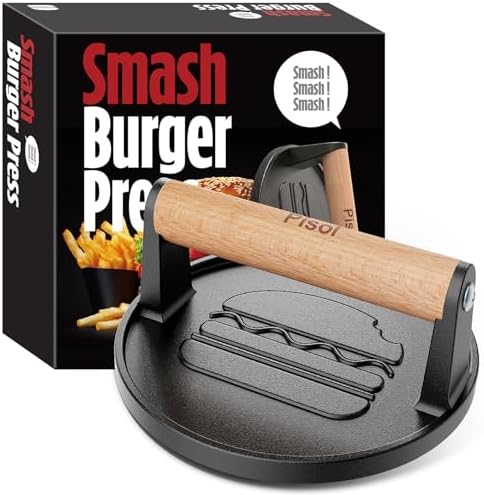
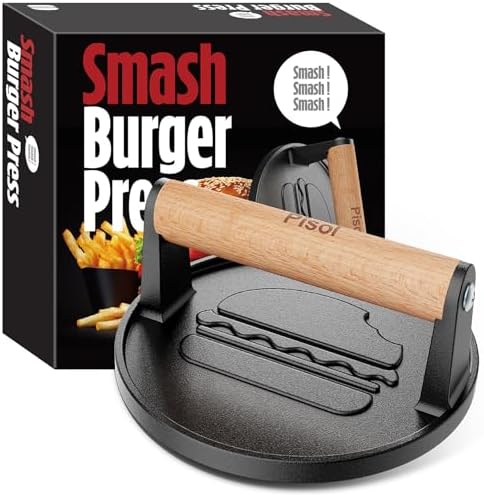
The dark coating on our cast iron press is oil baked directly into the metal pores until it polymerizes. It is not factory paint or a nonstick chemical coat. That thin shell sheds water and stops meat from sticking during a hard sear, but harsh detergents and machine wash cycles will strip it right down to bare gray metal.
Keep the press out of the dishwasher entirely. The harsh machine wash detergents will strip the protective oil coat, and the long steam cycle turns bare iron orange with rust before the cycle finishes. Hand washing with hot tap water is all the tool needs.
Cleaning while the iron stays warm
Clean the press shortly after cooking while the iron still holds gentle warmth. Scrape off any crusty grease with a flat wooden spatula or a stiff kitchen brush under running hot tap water. Avoid soaking the tool in a sink full of soapy water, which softens the cured oil layer.
If burnt bacon fat sticks to the bottom plate, pour a small handful of coarse salt over the warm surface and scrub it with a dry paper towel. The salt lifts carbon without stripping the underlying base finish, leaving the heavy base clean and smooth.
Drying completely on the hot burner
Towel drying is never enough for textured iron because small water drops cling inside microscopic pits. After rinsing, set the press directly onto a low stove burner for three to four minutes. The burner heat drives every trace of moisture out of the handle base and raised lettering.
Once the metal is hot and bone dry, switch the burner off. Leaving wet iron to dry in a dish rack is the fastest way to invite orange rust spots around the handle joints.
Rubbing in a thin oil film
While the iron is still warm from the burner, place a few drops of neutral cooking oil on the bottom face. Rub the oil over the entire surface with a cotton rag, working it into the screw threads, sides, and pressing face until the iron darkens.
Take a clean dry rag and buff the press thoroughly to remove any pooled liquid. You want a micro thin sheen rather than a greasy puddle. Excess oil left on cool metal turns sticky and gummy after a week in the cabinet.
Dealing with rust and storage spots
If moisture leaves a light orange bloom on the base, scrub the spot away with a pad of fine steel wool. Rinse the gray dust off, dry the iron over your burner, and rub a drop of oil into the raw spot to seal it again.
A press that sits on the back of your stovetop stays dry from everyday ambient cooking heat and needs almost no upkeep. If you store the press in a dark under-sink cupboard, wrap it in a dry cloth to block trapped humidity.
Worth remembering
- Never run cast iron through a dishwasher cycle or leave it soaking in the sink basin.
- Dry the washed press on a warm stovetop burner to force trapped moisture out of the iron.
- Wipe excess oil off until the metal looks matte rather than wet before storing the tool.
- Scrub unexpected surface rust blooms away immediately with fine steel wool and reapply warm oil.
Cast iron only asks for dry heat and a drop of oil after dinner. Set your press right beside the skillet tonight, wipe it while it is warm, and it will stay ready for the next burger.